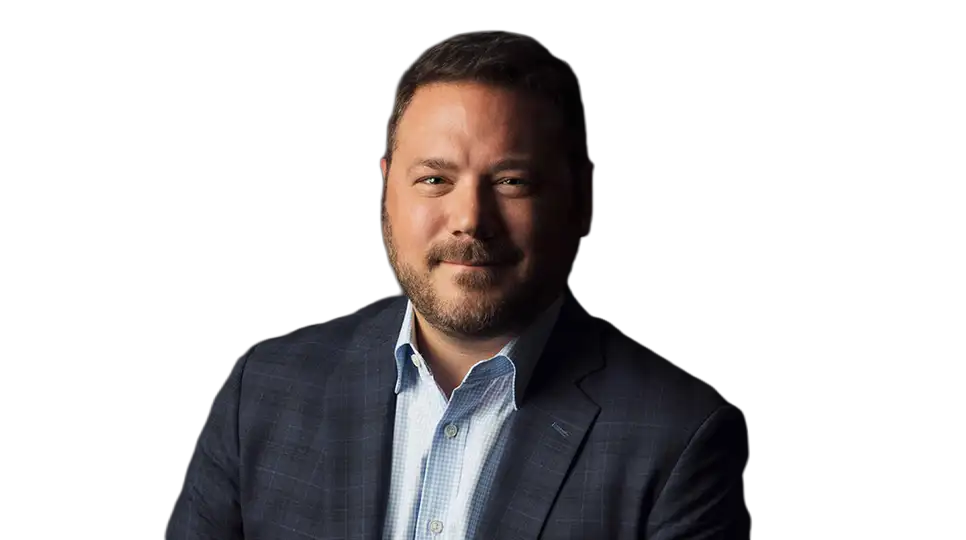
Full Interview Below:
Full Transcript:
Guy Benson: Joining us now is Ari Fleischer. Ari is the former White House press secretary to President George W. Bush and a Fox News contributor. Ari, great to have you back.
Ari Fleischer: Thanks, Guy. Good to be with you.
Guy Benson: I want to start with this kind of strange situation in the state of Texas, where a flurry of new polls suggest that James Talarico, the Democrat running for U.S. Senate, has a very good chance of winning. That’s what the polls say. A few show Ken Paxton tied or slightly ahead, the Republican. But most polls show that Talarico is edging ahead.
The governor’s race down there is actually relatively close. One or two polls have it tied, with Greg Abbott seeking reelection.
Recently, there was this odd 13-day departure from the campaign trail by Talarico. His campaign said he had the flu, a nasty bout of the flu, so he was, I think, out of public view completely for nine days and off the trail for 13 days.
That’s an awfully long time for any reason in October of an election year, when you’re running for office, let alone a Democrat trying to finally break through and win a Senate seat in a place like Texas. The explanation of flu has never made full sense to me.
I know apparently The New York Times got some footage of him at his house. I don’t get why you wouldn’t put him out there in some sort of video from his house, or do radio interviews over the phone, whatever. They made whatever choice they did.
I’m not sure we have that full story, but some right-wing influencers decided to take some seemingly made-up scoop and run with it, claiming he was getting psychiatric care in some other state. That has been denied, which has allowed Talarico’s camp to move the entire conversation toward the crazy lies they’re telling about him, neutralizing this weird thing about him being off the trail for almost two weeks.
I think it’s completely taken away from the actual knocks on Talarico, which are everything he’s ever said and his voting record. Now we’re talking about this instead.
From a PR and messaging standpoint, what do you make of this whole kerfuffle?
Ari Fleischer: Yeah, this is what frustrates me about politics. People go too far in both parties. They hate their opponents, so they allege the worst and make things up that just aren’t true.
There’s got to be a regulator on these things, and the regulator is common sense.
It was bad that Talarico took two weeks off from the campaign trail. He took the time off because he’s so embarrassed by his own positions. He can’t even face them. That’s the type of case I would make.
I don’t like inventing accusations because they feel good and sound good against the other guy, unless I know I’ve got the goods.
There’s a restraint in politics that was taken off probably a decade ago, maybe longer. Anybody can just say anything and wing it. If it turns out not to be true, they’re sort of forgiven by their base in the media, while the other base pounds them.
Don’t say it if it’s not true. Keep politics in balance.
Guy Benson: I agree with that. I would also note, because there are people on the left who are indignant about this, that I think part of it is them leaning in because there was this overreach, which is now blowing up in the Republicans’ faces to some extent and allowing the Talarico people to change the conversation and change the topic.
I think the topic should be all of his far-left positions and how he’s voted along those lines for years in the legislature.
But for the people who are clutching their pearls and indignant, I just remind people–and you can accuse me of whataboutism, but you were just noting that this has been normalized in maybe the last decade. I would go back further, Ari.
I think back to the 2012 campaign. Senate Majority Leader Harry Reid famously went to the Senate floor and completely made something up about Mitt Romney. He lied about Romney and his taxes.
After the election was over, someone called him on it in an interview, saying, “Hey, that was completely baseless and untrue.” Harry Reid basically just smirked and said, “Well, it worked, didn’t it?”
That type of thing happened and was incentivized and rewarded on some level. I think we’ve been on a bit of a downward spiral for quite a while here.
Ari Fleischer: That’s my point. It’s been going back many years, predating President Trump, and it’s about the restraints of our system.
Guy, I want to go to what you were talking about earlier, which was the polling question, because you brought that up vis-à-vis Texas, and I’ve been doing some research on this.
In 2024 in Texas, when Ted Cruz was on the ballot, the final poll showed Ted was going to win by 4.4 points. He won by 8.5. They underestimated the Republican in Texas by 4.1 points.
If you look at all the polling in the close races in 2024, it’s the same story. In Nevada, the polls said the Democrat, Hillary Scholten, would win by 4.9 points. She only won by 1.7. They underestimated Republicans by 3.2 points.
In Michigan, the polls showed Slotkin, the Democrat, would win by 2.3 points. She just barely won by 0.3. They underestimated the Republican by two points.
And my favorite myth in 2024: The final RealClearPolitics average showed Bob Casey in Pennsylvania would win over Dave McCormick by 1.8 points. McCormick pulled off a 0.2% win. The polls underestimated Republicans by two percentage points.
I could go back to 2022, 2020, 2018, and certainly 2016. The polls in the modern era consistently underestimate Republican performance in a lot of these states.
It’s a real nagging issue. And in Michigan, of course, remember Abdul El-Sayed was winning in the RealClearPolitics average of polls in his primary over Haley Stevens by 10.5 points in August of this year. That’s how much Abdul was winning by. He barely won by one percentage point. They overestimated Abdul’s strength by a whopping nine percentage points.
It keeps happening in one direction, Guy. I think the polls are going to be wrong again. It still is a year that’s favorable to the Democrats, but beware: The polls have largely been wrong in the past, and they’re likely wrong this time, too.
Guy Benson: Since you brought up Michigan in that race, it’s one that I’ve talked about every single day on this show. I think it’s really important for a number of reasons, and I know you’ve been tweeting, writing, and thinking a lot about it as well.
You’ve used something that just happened in that race to once again drive home your critique of the so-called news media. You wrote a whole book criticizing the news media, and I think they completely deserve it.
I would just point to this juxtaposition and then let you speak to it. The media’s treatment and deep dive into a sort of rogue family member of Natalie Harp, who’s in Trump’s circle, with The Washington Post going all in on that story.
Then there’s another big story being reported about the whereabouts of Ken Paxton, the Republican nominee for U.S. Senate, apparently in Dubai with some shady characters and his girlfriend or whatever. It’s not good for him. I’m not saying it’s not newsworthy.
But you compare the zeal, excitement, and effort put forth by journalists to do these kinds of stories about Republicans–I think some are complete BS hit jobs, while others are fair game–with what I see as a total lack of curiosity about, for example, James Talarico being MIA for 13 days.
Then there’s the revelation, clearly proven, that Abdul El-Sayed is lying about his family’s ties to the Muslim Brotherhood, Ari. It’s like journalists are saying, “Ew, that’s gross, and that sounds like a right-wing, bigoted attack, so we’re just not going to fact-check him.”
The closest thing we’ve gotten was the moderator of Meet the Press asking him whether it was true or not, and he said no.
Your response to that dichotomy, which I know you describe as a huge driver of our polarized politics?
Ari Fleischer: Yeah, and what really drives me crazy is, number one, NBC News did the interview with Abdul El-Sayed on Meet the Press, in which they asked him, “Do you or your family have any ties to the Muslim Brotherhood?” He said no, and they let it go there.
They didn’t arm themselves, NBC News, with any research. They didn’t go in with the information in their back pocket that Abdul’s sister had tweeted publicly that their mother belonged to the Muslim Brotherhood.
Why didn’t they confront Abdul with proof? They just let it go.
Guy Benson: I mean, to answer your question, they didn’t want to. You said they weren’t armed with facts. I would say they were disarmed.
Ari Fleischer: We’ve all heard of gotcha journalism. This is gotcha-free journalism that they extend to the Democratic Party.
And then they didn’t even cover it on NBC Nightly News, even though it was their station that made the news with the question.
So, yeah, you do have a case now. And let me stay on Abdul for a second. Not only did his sister tweet that their mother belonged to the Muslim Brotherhood, but his mother belonged to a group that was shut down in 2004 by the Bush administration for funding al-Qaeda.
And his sister-in-law was put on the no-fly list by Barack Obama. She tried to get off the list, and the Obama administration refused to let her off.
So here you have a family with terrorism ties up and down the line. Their candidate is running for the United States Senate, where he would represent America’s foreign policy and presumably have a security clearance.
Yet the media is doing profiles of Natalie Harp, the family of an unknown White House aide, while looking the other way at Abdul El-Sayed’s family, despite the allegations about his mother’s affiliation with the Muslim Brotherhood and his denial of those ties.
What is the media doing to us?
This is why we’re a polarized country, Guy. Half the country gets its news, sees these things, and knows what’s going on. The other half has no clue because they’re not told.
It’s the same thing that led into the Biden debate. If you remember, half the country knew that Joe Biden was in mental decline because we saw it and were told about it. We watched it every night on conservative media.
The other half of the country was absolutely shocked to see the truth for the first time when Biden fell apart in his debate.
This is terrible for America. This is why we’re polarized. You cannot have a media that tells one side of the story and protects the other side.
The failure of the left-wing traditional mainstream media to tell all the news fully, fairly, and accurately is killing our country. This is where polarization starts.
Guy Benson: Ari, I mentioned this yesterday with one of our guests, Julie Nepstein, by the way, a Democratic operative and strategist for many years. I repeated the point last hour, actually, when thinking about Michigan in particular, but not just Michigan. You’re seeing it in New York City and some of these congressional races. I feel like you’re seeing it to some extent in Detroit, right?
Black voters are getting this sense of, “Wait a second, are we being replaced in the coalition? Are our opinions, our clout, our influence being replaced by Muslims, Islamists, whatever it might be?”
That’s something I think some Black voters are starting to think about and get concerned about.
I think it’s undeniably true that Jewish Americans, who’ve been very loyal Democrats for a very long time, are recognizing that the party is completely turning on them. Now they might be outgunned rhetorically, outnumbered at some point, and the winds are blowing distinctly away from them, sometimes in a very hostile way.
Is there a realization you’re seeing within the Jewish community of, “Oh, wow, we felt like we were really important power brokers within this coalition, and they’re kicking us to the curb”? And is it too late to do anything about it?
Ari Fleischer: Yeah, unquestionably, I’m seeing that. And I should add, your listeners should know that I do work for the Mike Rogers campaign.
But you just read the press in Michigan, and it’s full of instances of leading members of the Jewish community who have identified themselves as lifelong Democrats saying they cannot bring themselves to vote for Abdul.
The reasons are obvious. In addition to what I just described about his connections to the Muslim Brotherhood, he’s called Israel “bloodthirsty.” Who uses that word? Who says that?
After an attack on a preschool at a Jewish synagogue in Michigan, Temple Israel, outside Detroit, an attacker in a car loaded with explosives tried to blow up the school. He was caught by security and shot.
Abdul’s reaction was, “Hurt people hurt people,” because this would-be attacker, a terrorist, had a brother who belonged to Hezbollah and was killed by Israel in an attack on Hezbollah.
Abdul made an excuse for it. Instead of saying, “Hurt people hurt people,” he should have said, “Hezbollah hurt people.” That’s an excuse for terrorism.
The Jewish community knows it, feels it, and sees it. So a typically overwhelming Democratic vote–the Jewish vote–is likely going to be split very evenly, probably 50-50 this cycle in Michigan. That’s a massive defection away from the Democrats, away from Abdul.
The same thing is happening in the African American community. Abdul has a lot of problems with Black Detroit. There’s a sense of arrogance on his behalf that you’ve seen written about in Michigan, and I think that’s going to hurt him, too.
I think this is why this is a race where, even if Rogers goes into it, say, down five points in the polling average, I’m convinced of Rogers’ victory. You’re going to have a group of people who tell pollsters one thing and then vote differently in the ballot box and in the voting booth.
The same thing that happened in the primary is going to happen in the general. I’m convinced that’s going to be a Rogers win.
Guy Benson: Ari, finally, about a minute left. There’s a new White House press secretary, the position that you, of course, held in the early part of the first term of President George W. Bush. She debuted yesterday and received some mixed reviews and some shots at her.
Maybe not specific to her, but what are your dos and don’ts? What’s your big advice to someone taking on that very difficult job?
Ari Fleischer: I can’t emphasize how hard it is to come from the outside, not have previously been a staffer, and start that job in the middle of a president’s term.
You have so much to learn. Her job is not to brief for the next couple of weeks. Her job is to get up to speed on all the various issues and know every position President Trump has taken on everything: agricultural issues, tariff issues, foreign policy.
She needs to sit down with National Security Council staff and get briefings on hotspots around the world. She needs to become a master of substance, and that way she can address the myriad questions she’ll get.
And then, Guy, she needs to be in the meetings with the president. You can’t speak for the president if you don’t listen to the president. She needs to hear what he hears, and that way she can reflect what he would want to say.
Guy Benson: Ari Fleischer was White House press secretary under President George W. Bush and is a Fox News contributor. Ari, thank you so much.
Ari Fleischer: My pleasure. Great to be with you.