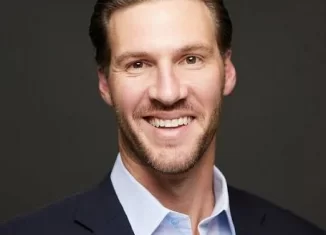
Charles Cooke: You Can’t Say You Hate America and Call It Love
Listen Below:
Full Transcript:
Guy Benson: With us now is Charles C.W. Cooke, one of our favorite guests, senior editor at National Review. You can check out his podcast, which is named after him and easy to find. Charles, welcome back to the show.
Charles Cooke: Thanks for having me.
Guy Benson: Charles, you’ve been churning out a lot of takes since we last spoke, and I’d like to explore as many of them as we can here, starting with Hasan Piker.
He was asked a question the other day–a natural one, I think, given his outspoken, not just disdain for but open, seething contempt for this country. He has said over and over again how much he hates it here, how much he hates us, how much we deserve 9/11, and how we’re worse than al-Qaeda. My audience is familiar with some of his worst hits, right?
But someone asked him, “Okay, fine. If that’s how you feel, why do you stay here? You’ve got contacts around the world. Presumably, you could go to any number of other countries if you’d like. Why not leave if you hate us and hate this place so much?”
And his answer was this weird version of a love story. You called it out. You think it is sophomoric. Explain.
Charles Cooke: Well, he said that he loves America and that he’s staying here because it has potential. And I think this is garbage. I think it’s a garbage take.
Leave aside for a moment that he was banned from speaking in Britain, which I opposed, so he really does need to be here, whether he thinks he does or not.
But he doesn’t love this country, because that’s not what love means. Now, you can love a country or a person or a place or a company or a church and still have objections to it. You can see room for improvement. You could complain.
But there is a big gap between loving something and having issues with it and hating it. And if you believe that a country is the equivalent of al-Qaeda, you hate it. It is utterly ridiculous.
Guy Benson: Worse than al-Qaeda, actually, in his calculation.
Charles Cooke: It’s a dodge to say, “I love this place if only I could get my way and it were fundamentally transformed.” In other words, if it were to become fundamentally different.
You don’t. I love America. And what does that mean? Of course, I complain all the time. I come on your show and complain all the time. But what it means, Guy, is that I love it right now. I love the place right now–this place with these laws and this Constitution, and this culture and these people who are in it at the moment.
Not if I got my way on everything, but I love it right now. And it sounds like he doesn’t. I think it’s such a cheap way of trying to get around the criticisms to say, “Oh, well, I love it if it became what I want it to be.” That’s not love.
Guy Benson: Oh, and he also said–I mean, one of the complicating factors of pretending that he loves the country is saying angrily and loudly, repeatedly in public, that you hate it, right?
So, like, you know, if you love your spouse, let’s say, but occasionally have frustrations or tension–and that’s what happens in a relationship–fine. But if what you are most known for is trashing your spouse and saying, “This is the worst human on the planet. I hate him or her. I despise this person with every fiber of my being. They’re worse than Lindsey Clancy”–you go down the entire roster of grievous insults–and then, when challenged on it, you say, “Well, I just love the person that they could become.”
I mean, who would mistake any of that for love?
Charles Cooke: That’s precisely right. No one would buy the argument. And I think it shows that he just doesn’t want to live with the consequences of his words.
He’s done this in other areas as well. There was this ridiculous New York Times interview where he outlined all of these arguments for shoplifting and violence, really. And then, at the end, the interviewer said to him bluntly, “So, would you endorse this or that?”
He said, “Well, no.”
We’re doing the same thing here. He knows that it is rhetorically bad for him to be accused of hating America, so he falls back into this position. But, as I say, that’s not love.
Guy Benson: You know, maybe he’s more concerned about other people around him–his friends running for office–and how that might reflect on them. I think he said that he hates America enough for us to fully believe him, but I think you might be trying to couch it slightly differently at the moment because his ilk is on the precipice of quite a lot of new power in this country if the election goes the way he wants it to.
You mention him being banned in the UK because of some of his extremist views. That brings me to another story out of your homeland. I talked about it last week on the show. It feels like a disturbingly perfect, almost like a laboratory-pure encapsulation of the problem that the UK is facing, and frankly, a lot of Europe is facing right now.
Maybe you saw it, maybe you didn’t. The Archbishop of Canterbury, who’s this sort of woke woman, she’s the head of the Church of England. She gave, on the 25th anniversary of 9/11, an award to a Muslim cleric. It was an award on interfaith unity, and there was a photo of her grinning, and here’s this Muslim cleric grinning. There’s his wife, covered from head to toe. You can even see her eyes, maybe smiling, maybe not. She’s there as well.
And then it turned out that this guy, this Islamic preacher, was indeed a radical who had given an award himself earlier in his life to Osama bin Laden and praised Osama bin Laden. And the head of the Church of England had to go and basically take back the award because they hadn’t vetted this man properly.
One report I saw is that he had been banned from preaching in Pakistan. I don’t know, given the lack of a First Amendment in the UK and some of the free-speech culture issues there, why he would then be welcomed in the United Kingdom to preach if that were the case.
There was also a report that his wife in the photo was wearing a medal, a physical medal. I’d seen that people were wondering why it was bestowed upon her, and the explanation was that the husband wanted the medal around his wife’s neck so that the Archbishop of Canterbury, being a woman, would not have to touch him.
Charles, this entire mess, on one level, should have been avoidable with some basic vetting–like Googling, “Has this man ever praised Osama bin Laden on the anniversary of 9/11?” Maybe we should figure that out.
But does it maybe underscore a problem? Which is, if this was their go-to guy at the Church of England for interfaith cooperation, does that mean the pickings are slim to give this kind of accolade to?
Charles Cooke: Yeah, there’s so many problems here.
One is the lack of confidence in the Church of England. Obviously, I’m an ecumenical sort. That’s one of the great achievements of small-L liberalism, is to permit people with different views on extremely important topics to live together.
But one of these things that liberalism assumes is that each group, while not killing each other or trying to expel each other, will proselytize on behalf of its own faith.
The underlying idea behind tolerance is not that the Catholics shouldn’t be Catholic, or the Protestants shouldn’t Protestant, or that Jews shouldn’t be Jewish. It’s that we all live together.
And the Church of England seems not to have understood this, and so it’s become remarkably weak, and it’s not even willing to stand up for its own beliefs, if it even has any.
And then there’s the sort of people that it invites in. There’s a real irony there, isn’t there, that this person has been celebrated here by what is, in Britain, still an arm of the state. The Church of England is still established, where a lot of English people, for expressing political views that we would in America consider to be quite mainstream, have been arrested.
It’s got to be unbelievably frustrating to watch somebody who praised Osama bin Laden–
Guy Benson: Yeah, a bin Laden fan getting an award.
Charles Cooke: And you’re worried about your tweets, right? And then you tweet out that your taxes are too high, or you think there should be less immigration, and you get a knock on the door and possibly you’re prosecuted.
This is one of the great problems in Britain, is that injustice–and this is just a really, really good example of it.
Guy Benson: Closer to home, Charles, I saw you were commenting on this as well.
There’s a group of 20 or so states and other cities that have bound together to sue the Trump administration over its policy restricting and putting more safeguards against immigrants–in this case, legal immigrants–obtaining green cards if they rely on welfare and public benefits.
And the argument from the Trump administration being: If you want permanent residence here through our legal system, you’ve gone through the right way, you haven’t come here illegally, but you want to stay here permanently, we want to make sure you’re not going to be effectively a ward of the state or reliant upon taxpayer money.
And it seems like the new litmus test on the left, or one of them, is to oppose this. You think it’s lunacy, even based on your own immigration experience.
Charles Cooke: Oh, I think it’s disgusting. I’ll go further than leniency.
There obviously are debates around what the law is, although it was clear when I moved here and when I was given a green card that I wasn’t allowed to use welfare.
But whatever the law, what the ought-to-be take is that nobody who moves here from another country, prior to becoming a citizen, at which point obviously the laws apply equally and we’re going to have welfare then everyone can get it, should be given a single cent of public money.
That’s crazy.
Look, I’m in favor of immigration. I’m an immigrant. I think our immigration system is quite badly designed. I think we should have a point system and be far more culturally confident in who we take in and why.
But you have to have some immigration, and one of America’s great strengths is that it brings in some of the best talent from around the world and makes those people Americans, which is why we have so many great companies where, say, Europe does not.
But the argument there is that those people are beneficial to us. We take them because they’re going to excel. How can you square that with giving people who move here, who choose to move here, public money?
It’s just preposterous. It’s morally wrong, and it would be morally wrong even if we didn’t have $40 trillion worth of debt and annual deficits of $2 trillion.
But when you add that in, it is suicidal to suggest that somebody would move and then existing Americans owe them a living. Come on. It was wrong.
Guy Benson: Well, the argument–and we saw this press conference that was given by the mayor of New York City, Zohran Mamdani, who’s a communist, who said, almost like this was a self-evident argument, quote, “Immigrants are New Yorkers.”
Like, oh, well, you know, he said so, and therefore it is so, and therefore it is cruel to deprive someone in that position of help that they might need as a fellow New Yorker. That’s the argument.
Charles Cooke: But it’s a silly argument. I moved to New York. That’s where I emigrated to. And in one sense, I was a New Yorker. But at the beginning, I wasn’t an American. I was a foreigner living in New York going through the immigration process.
So even if you buy the idea that, in some cosmic sense, the moment somebody arrives in a place, they are of that place–which I don’t. I do think it takes time–but even if you buy that, that doesn’t get you to where Mamdani is, that they’re therefore entitled to the property of other people.
I mean, if that were the case, then a lot of people in American history would have been immediately entitled to public money. But actually, this is something that historically the United States has looked down upon: the prospect of people from other countries becoming a public charge.
Which is why, in the big surge of immigration from about 1880 to 1924, one-third of the people who came here went home because they couldn’t support themselves. Did we owe them a living? Of course we didn’t, and we don’t now either.
And in some sense, we actually are less needy of people now who can’t support themselves than we were then, because there were vast swathes of this country in the late 19th century that needed people and needed to be populated. That’s just not true now.
We can afford to be choosy, and we should be choosy. And one of the things we should be choosier about–
Guy Benson: I don’t think they want to. That’s the point, right? I think public charges, they view that as a good thing. More people on the dole, part of their constituency and their political power, whether through apportionment or eventually becoming eligible to vote. I think that’s a big part of this power play that they have in mind.
Charles, just a few moments left. I want to get your quick responses to two other issues.
The backlash against data centers. You have a warning to Americans who are, in your mind, falling for this. What’s your point?
Charles Cooke: My point is that we already rely extremely heavily on data centers and that AI data centers are the latest in a long line of data centers that Americans will use.
Sixty-five million people currently use AI every day. Half of Americans say they’ve used it once a week.
In everything we do. We don’t see it, but in everything we do, we use data centers. You go to a website, you’re using nine or ten of them when you click the first page. Your phone is pinging all day with pictures from your friends and fantasy football, and this podcast that’s relying on data centers.
You go in your car, you drive somewhere, you’re not only using a bunch of data centers, you’re using satellites up in space. You put on music in your car that’s streaming from somewhere. You buy lunch with your credit card that’s using a data center.
It’s just really odd to me that we’re having this debate now. So it’s 30 years after data centers became normal and 20 years after Americans became absolutely addicted to them.
And, you know, we like the fact that our photographs appear on all our devices and are saved forever. We like that our email is accessible. We like that we can use Google Docs on whichever computer we happen to be sitting in front of.
This doesn’t happen because of some big tech company or the government. This is a demand-side issue where Americans have said, “I want that.”
Guy Benson: No, in fact, we demand unlimited data. That’s what we want, and it doesn’t happen magically.
Charles, less than a minute. You’ve written a column in response to this whole kerfuffle around Nikole Hannah-Jones and education. We talked about it last hour.
If you could boil down the essence of your point on this controversy into 45 seconds, what would that be?
Charles Cooke: Well, I’ll do my best. I’ll do it very quickly.
There’s nothing at all irrational or unreasonable about thinking that your children are more important than others. They are to you. This is where she erred.
She sacrificed her children for ideology, which is an evil thing to do, and then she didn’t even follow through with the worldview that she espoused.
She said, “Oh, it’s important for parents to take care of their kids in school. That’s how you get good schools,” and then she didn’t do it.
So this is somebody who is famous for her supposed expertise in education, whose daughter now hates her and thinks she betrayed her.
We should never listen to Nikole Hannah-Jones on anything ever again.
Guy Benson: Yeah, if that’s her claim to fame, and she’s failed this catastrophically in her own life for her own family, that’s too bad for them, and I hope the daughter ends up in a good place.
But we should not follow the intellectual lead of this woman on anything, and I agree with that bottom line wholeheartedly.
Charles C.W. Cooke of National Review. Check out his podcast if you’d like. Charles, always appreciate it. Thank you.
Charles Cooke: Thanks for having me.