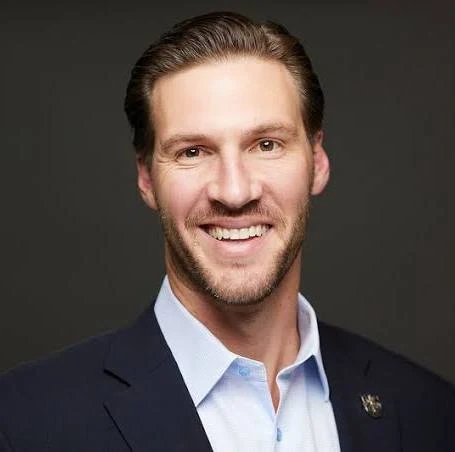
Former NBA player and human rights activist Enes Kanter Freedom talks about growing up in Turkey, coming to America, and why he started speaking out against dictatorships and human rights abuses. He also explains how his criticism of China and the NBA’s business ties to the country ultimately cost him his basketball career. Freedom then discusses his recent fight with the WNBA over its policies on transgender athletes, his support for Sophie Cunningham, and his ejection from a Chicago Sky game after wearing a shirt defining a woman as an “adult human female.” He says he’s now taking legal action over the incident and talks about the backlash he’s received, including frequent death threats and messages referencing the shooting of Charlie Kirk.
Listen Below:
Full Transcript:
Guy Benson: With us now is Enes Kanter Freedom, a former NBA player, human rights activist, and ambassador for athletes for America at the America First Policy Institute. You can check him out at enesfreedom.com.
Enes, great to have you on the show. Welcome.
I wanted to start by zooming out for a second. A lot of our listeners are probably familiar with you and your background and your activism. Many of them, though, are not. Just to lay the foundation for the conversation, tell us about your journey to the United States, your exit from the NBA, and then we’ll move on to this whole controversy involving the WNBA in a moment.
Enes Kanter Freedom: Of course. I was born in Switzerland, and I am from Turkey. Growing up in Turkey was a very difficult childhood because if you’re born in the Middle East, and if you want to be elected again, you attack America and you attack the West.
I remember when I was growing up, my little friends were burning American flags and breaking crosses. I remember one day they gave me a flag to burn. I threw the flag down and ran upstairs to my mom. I said, “Mom, my friends are telling me to hate America, hate Christian people, hate the West. What do I do?”
My mom said, “I’m not going to tell you what to do, but do not hate anyone before you meet them.”
That day, I gave a promise to my mom. The environment that I was growing up in was getting more and more toxic every day. Finally, when I was 17 years old, my dad was like, “Enough is enough. You’re going to America to get your education and play basketball at the same time.”
After I got here, I realized that everything that I had learned for the last 17 years was just a lie. So I now dedicate myself to inspiring the next generation so they won’t grow up anti-West, anti-American, or anti-Semitic, because I feel like if we want to have a better future, we have to invest in our young generation.
Guy Benson: And one quick follow-up on that. You’re a bit younger than I am. You’re in your 30s, so you were a young kid, maybe elementary school age, on 9/11 in 2001. Do you remember that day? What was that like, and what were the reactions from some of these friends of yours? There was so much anti-Americanism that you were steeped in growing up. What was the reaction where you were from when that happened?
Enes Kanter Freedom: So, growing up, unfortunately, there was this huge anti-American sentiment all over the Middle East, actually. And I know that our listeners are going to be shocked, but in schools, in front of the classrooms, you have an American flag. And if you don’t step on those flags, you’re not even allowed to attend the class.
So think about an environment, right?
Guy Benson: An American flag–
Enes Kanter Freedom: There’s like–
Guy Benson: But an American flag on the ground?
Enes Kanter Freedom: Yeah, you were required to step on it.
Guy Benson: Step on it.
Enes Kanter Freedom: You have to. And I remember I never stepped on it because I was like, “This is not the right thing to do.” I always jumped over it.
But now I’m thinking, right? It’s disgusting. It’s disgusting because these politicians are using this anti-American, anti-West hate toward their people so they can be reelected again. And it’s not the religion; it’s the culture that these politicians are creating.
I think we need ambassadors to change that, and it is unacceptable.
I do remember exactly what happened that day. It was one of the most disgusting terrorist attacks ever. But unfortunately, many politicians in the Middle East used that to be reelected again.
Guy Benson: I do want to also just touch on for a moment your activism, your human rights work. That was at first celebrated and embraced in the NBA. You were a player in that league. You were with Boston and elsewhere, and a lot of people were all into what you were doing and loved it. Then all of a sudden, you decide to speak out on a different issue, and things got very, very chilly very, very quickly. Talk about that.
Enes Kanter Freedom: So I do want to thank the NBA and all my coaches and actually everyone around me–all the players, actually–because when I was fighting against the dictatorship in Turkey, they supported me so much.
And you know what? My teammates’ support, because they were like my brothers, gave me so much motivation to fight for what’s right, to fight against the dictatorship in Turkey.
Guy Benson: And actually, by the way, you were suffering a lot, right? Because back home–
Enes Kanter Freedom: Yeah. I haven’t seen my family for 14 years now. They put my dad in jail.
But even the commissioner, Adam Silver, came out and said, “We have our player’s back, and whatever he says is freedom of speech, and what he’s doing is right.”
I promise you, man, that gave me so much hope to fight against one of the biggest dictatorships in the world, Turkey.
As soon as the topic changed–it was not Turkey, it was China–the support from my teammates, the coaches, and the league itself was nowhere to be found.
Why? Because the NBA makes billions of dollars from China, but when it comes to Turkey, they make no money.
I was like, “Wow. So all their support was just a big lie,” right?
And then I remember one day my manager called me. He was like, “Listen, man. You’re 29 years old. There are two things in the sports world in America which every athlete knows: If you criticize Nike and if you criticize China, you will never be able to play sports ever again in this country.”
I was shocked. I’m like, “What are you talking about? I’m not talking about politics. This is pure human rights.”
They said, “Well, sorry. They pay the bills.”
And unfortunately, my whole career came to an end.
Guy Benson: Yeah. So you were speaking out against egregious–I mean, really grievous–human rights abuses by the Chinese Communist Party. And because there is so much money that flows from the Chinese market to the NBA, that was curtains for you.
There was famously another example with the GM at the time of the Houston Rockets. He had spoken out in favor of the people of Hong Kong, and boy, that collapsed on him very quickly.
The whole “freedom of speech, they can do what they want” thing–a lot of guys, whether it was anthem kneeling, which we talked about earlier on the show, or talking about Black Lives Matter, you name the cause, especially if it was sort of left-coded, the league was great with it.
China, and whether it was the concentration camps and the slavery and the other abuses, for you to bring that up apparently was verboten.
How quickly after that–where your agent’s words sort of indicated the pressure–how quickly did your career in the league end after you took that stand?
Enes Kanter Freedom: So after the third game–actually, I played three games, right? After the third game, I walked into the locker room, and all my teammates walked into the locker room as well. Then they all came up to me. They were like, “Listen, have fun. This is your last year in the league. I hope we win a championship, because you’re never getting a contract ever again.”
At that point, I’m confused. I’m like, “What are you talking about?” Because I thought the NBA was all about social justice. NBA was all about bringing causes that are bigger than basketball.
They said, “Well, the NBA is a place that actually supports you until it hits their pocket.”
So that’s what I realized: Everything that the NBA and Nike were standing for was just hypocrisy.
Guy Benson: Well, it’s social justice with an asterisk, right? They can definitely beat the drum on certain things, but when you start to threaten the bottom line, then it’s a whole different story.
I could get into some of the people who have been very outspoken who all of a sudden clam up on China, whether it’s LeBron or Steve Kerr or others, but that was very clearly the lesson that was directed at you–first sort of politely, then with some urgency. They’re like, “Okay, he’s not going to stop, so he is done.”
Which brings us to the next phase of your life and your career. I’ve seen you speak a few times. You and I met out in California several weeks ago. You do a lot of speaking. You go out all across the country and meet people. You’re involved in a lot of different things.
When did the WNBA issue and this whole controversy around the definition of woman and fairness in sports first cross your radar and get your attention?
Enes Kanter Freedom: Of course. I even remember the date. So it was back in May 2026. I was watching one of the WNBA games because I’m actually a huge fan of the game.
After the game, I was checking social media, and one of the players–her name is Gabby Williams–was giving an interview. She said, “I have no problems with a trans athlete playing on my team or against my team.”
So that put a little question mark in my head, right?
Then, as the weeks went forward, I was listening to all the interviews done by the coaches and the other players, and all they were saying was like, “Hey, we would love to welcome a trans athlete on our team or against our team. We will welcome anyone who identifies as a woman.”
So I was like, I just got cut out of the NBA. I love basketball. I miss basketball.
So I looked at their collective bargaining agreement, right, because I love to read. Article 13, Section 1A says, if you identify as a woman, you’re allowed to play.
I was like, “If anyone can be identified as a woman, I am one.”
So I came out and said, “You know what? From now on, I identify as a woman, so I can play basketball, right?”
And then the whole world, all the players, and the league itself said, “Oh, no, no, no. He’s doing it for a stunt.”
I’m like, “What are you talking about? This is your rule that you put in. This is in your collective bargaining agreement.”
So I was like, “You know what? From now on, I’m a woman, and I would like to play basketball.”
Guy Benson: And they obviously have not taken to that very well.
This runs parallel with the whole Sophie Cunningham situation, where the player on the Indiana Fever simply came out and said, “I believe in biological reality. I believe in actual fairness and safety for girls and women’s sports.”
She made it very clear: Everyone’s welcome at my table. I’ve got nothing against trans people. We can be friends. We can hang out. But when it comes to women’s and girls’ sports, that is only for biological women.
Which, by the way, is the 80% position of the United States among the American people. It is reality and a very popular position.
But within the WNBA, it was hyper-controversial. She is now being maybe not fully blackballed the way you were, but ostracized, taking hard fouls, with very few people speaking out in her favor.
This very simple thing that she did and said–even though I think a lot of them probably secretly agree, they’re too scared to say it.
She’s getting booed and harassed on the road wherever she goes. People who support her are getting attacked and harassed in arenas, including you, by the way. They called you a threat.
What do you make of the Sophie Cunningham example?
Enes Kanter Freedom: I think it is time that we start advocating for Sophie Cunningham to get the Woman of the Year award.
I think what she has sacrificed and what she stands for is amazing. She’s not only inspiring women in the WNBA, but kids from all over the world.
I remember I was coming here after the Chicago game, after I got ejected. I sat down next to this parent, and he was like, “I know who you are. I don’t want to bother you, but I just want to ask one thing. If you know Sophie, can you please tell her thank you as a parent?”
He said, “I have two daughters, and now I can finally show them someone who is an idol and tell them to follow her footsteps.”
That brought tears to my eyes.
I think she’s an American hero. She loves this country.
And the thing is, all the other players–this country gives you everything. This country gives you your job, money, respect, your basketball.
But you look at every WNBA game, Sophie Cunningham is the only one who puts her hand on her heart during the national anthem, right?
I just wish that other players who are disrespecting this country and flag would travel more to some of these dictatorships out there, and then they would realize what oppression looks like.
So I think it is time to start the conversation about Sophie Cunningham winning a Woman of the Year award.
Guy Benson: Let’s talk about some of your critics. They call it a stunt; you’re calling it a stand. You’re making a point: “Hey, I identify–if this is the standard, if this is what anyone who says they’re a woman gets to play, fine. I’m raising my hand. I am one. Let me play.”
Of course, they won’t let you do that. They’re saying, “Oh, look, he’s making it about himself. He is exploiting the situation. He’s doing this for attention. He’s trolling.”
What’s your response to people who are saying you’re not being serious and you’re just kind of attacking the league for sport?
Enes Kanter Freedom: First of all, these are the rules that they put in. I’m just a rule follower, right?
Tomorrow, they can literally decide to come up and add the word “biological” next to the word “female” in their collective bargaining agreement, Article 13, Section 1A. I will walk through the sunset, I will disappear, and they will never hear from me ever again.
So all these people out there who think I do this for attention or a stunt–my DMs are full of images and videos of the moment that Charlie Kirk got shot, and they’re saying that I am next, very soon.
So all these people who think that I do this for attention: I get death threats every hour.
So this is one. And two, define what a woman is, then.
I mean, I’m not shocked because we have a sitting Supreme Court justice whose job is to interpret the law but cannot even define what a woman is.
I know you went to law school and passed the bar exam, but let me explain it as someone who speaks English as a second language: adult human female. Or, to make it easier, just check your birth certificate.
Guy Benson: On the Chicago incident, last question. You were there, and we see this in a number of different arenas–people showing up with signs or T-shirts just supporting women in women’s sports. They’ve been harassed, in some cases kicked out of arenas, even though it’s so ironic. It’s the WNBA. The “W” should stand for something.
But again, this is a punished viewpoint now, whereas all sorts of other trans stuff, political stuff–that’s all fine. You just can’t do this.
You showed up in Chicago. What happened, and tell us about this legal challenge that you filed.
Enes Kanter Freedom: Right. So I don’t fear God, and I carry the light that exposes their darkness.
I simply went to the game, and I paid thousands of dollars out of my own pocket because I would like to support all these players and the WNBA itself, right?
I went to a game. I simply wore a T-shirt that had the definition of a woman: “adult human female.”
And I was sitting on the court, right? When Sophie Cunningham shot the three, I simply put my hand in the air and celebrated.
The next possession, she came back and said, “She’s not going to sleep with you.”
I was like–I turned around to my manager. I was like, “They should really say that.”
The next person, I simply got up and said, “Hey, I’m here to protect women.”
And that really, I guess, triggered her, and she started dropping F-bombs and stuff. And they kicked me out of the league–out of the game.
Listen, I played 11 years in the NBA. I know every rule out there, right? As a fan, we are not allowed to cross over the baseline or the sideline. So if you get up and put your hands in the air, that’s your freedom of speech, right?
And they kicked me out of the game.
So yes, we are suing the Chicago Sky and the city of Chicago because the arena is run by the city. So we’ll see what happens.
But what was so disgusting, after the whole incident, the Chicago Sky owner, Michael Alter, came out and said, “Oh, Enes’s action was equal to shooting a gun.”
I’m like, “What are you talking about?”
Guy Benson: So that is an absolutely insane thing to say. They called you a threat. That comparison is nuts.
I think it’s indicative of how this debate, quote-unquote, is going and how weak their position is. And I will continue to watch this play out with great interest.
And Enes, I’m so sorry that you’re going through all these death threats. That is awful. That should not happen.
But we appreciate your time coming here today, and we hope to talk again soon.
Enes Kanter Freedom: I appreciate that. Thank you.